Story and photos by Logan Jackson
Since 2017, the Deaton Scholars Program has allowed Mizzou students to be part of innovative, interdisciplinary teams dedicated to addressing some of the world’s most pressing challenges.
The program has been overseen by the Honors College for the past year, and while there have been a few changes, the mission remains the same – bring together motivated Mizzou students to collaborate on solutions to pressing local and global challenges rooted in poverty.
“It has been extremely exciting to continue the program via the Honors College,” said Michelle Teti, associate dean of the Honors College. “Students want a space to think together about addressing big problems, and their work is inspiring and impressive.”
The Deaton Scholars Program was born out of the Brady and Anne Deaton Institute, which was founded in 2013. Brady Deaton served as chancellor of the University of Missouri from 2004-13, after coming to Mizzou in 1989 as department chair of agricultural economics. He also served as deputy chancellor and provost at Mizzou. Anne Deaton has focused her career on special needs populations including the elderly and persons who are cognitively and physically challenged. She worked in higher education as an assistant professor in the Mizzou Department of Human Development and Family Science, and in state government, serving as deputy director of the Missouri Division of Aging, and then director of the Missouri Division of Developmental Disabilities.
“We are very fortunate to have the support of Brady and Anne Deaton, who have been champions for eliminating extreme poverty and food insecurity, both locally and globally,” said Catherine Rymph, dean of the Honors College. “Students involved in the Deaton Scholars Program have done incredible work over the years, and we’re excited to continue that in the Honors College.”
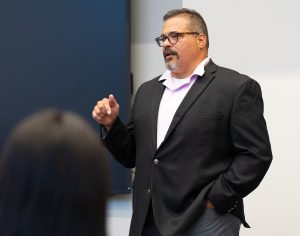
Last semester, students in the program met regularly in teams and pitched potential projects that could be done across Columbia. They met with the Deatons as well, sharing their ideas and receiving valuable feedback. Students also worked with Jose Ramirez, the Deaton Scholars Program Faculty Fellow, and Marin Chamberlain, the student facilitator of the program. Ramirez is an assistant teaching professor in the College of Health Sciences and Chamberlain is a junior constitutional democracy and philosophy double major.
“I am grateful for the opportunity to work with such remarkable students in the Deaton Scholars Program,” Ramirez said. “I’m inspired by their passion, creativity and commitment to help our community. Watching students develop ideas that meaningfully address local challenges reminds me why this work matters, and why our future is in very good hands.”
Moving forward, the Deaton Scholars Program will take place during the spring semester and will feature six engaging biweekly sessions where scholars exchange ideas, build leadership and problem-solving skills, and connect with campus and community partners. Sessions will be interdisciplinary, community-centered, and guided by both peers and faculty, creating a supportive space to turn ideas into action.
To be eligible for the program, students must enroll in the Wicked Problems in Public Health (GN_2310H) course in the fall. This dynamic service-learning course fulfills the behavioral science general education requirement and equips students with the tools and frameworks needed to tackle complex social problems. Students selected for the program will participate in the program in the spring and receive a $2,000 scholarship.
The course and the program are open to all Mizzou students from any major and at any class level. Non-Honors students can email mizzouhonors@missouri.edu to request a permission number.