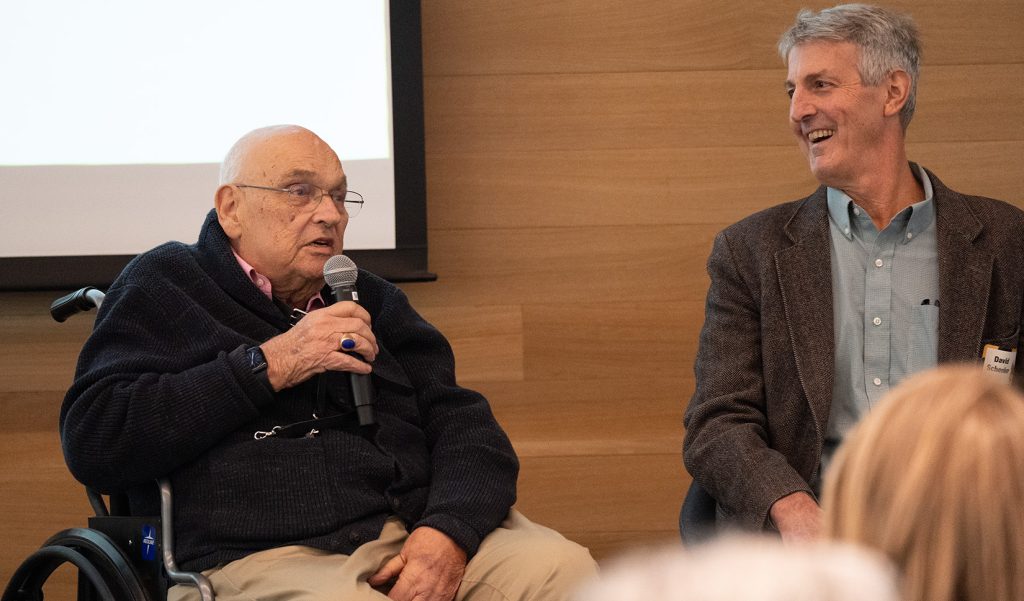
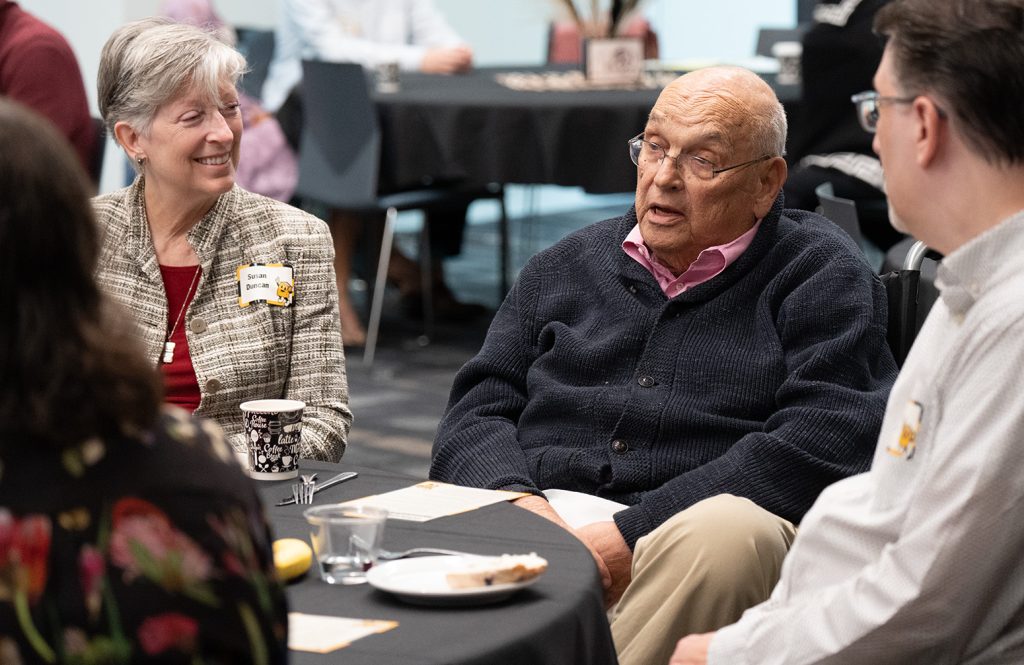
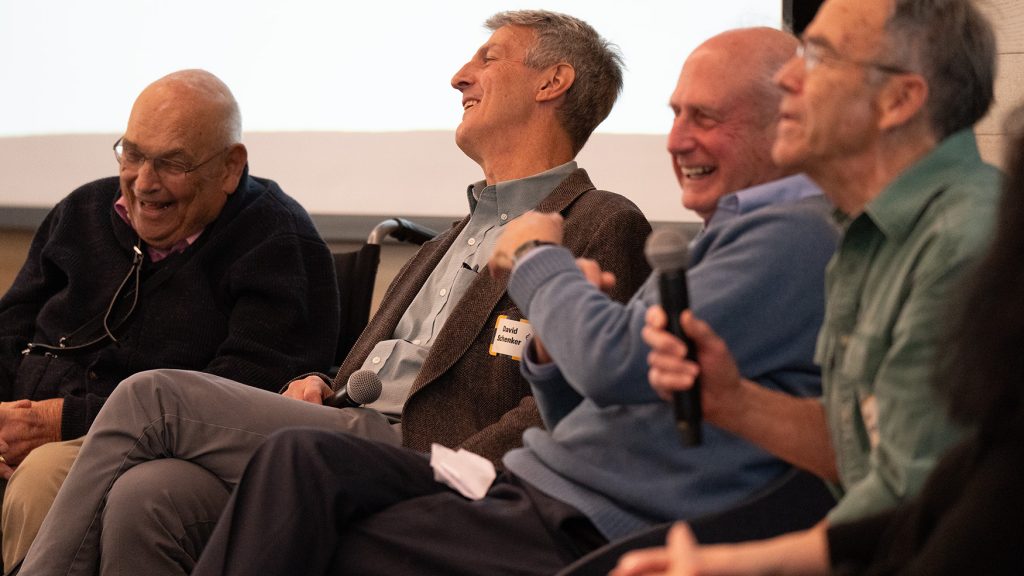
The Honors College mourns the loss of Bill Bondeson, who passed away on Tuesday, March 31, 2026. Bondeson joined the University of Missouri as a professor of philosophy in 1964. He retired from Mizzou in 2011 after decades of service, including directing the Honors College from 1969-72 and teaching in the Honors College Humanities Sequence nearly every semester of his tenure.
Below, Rachel Harper, associate dean of the Honors College and longtime friend of Bondeson, shares her memories of Bondeson and the impact he made in the lives of others.
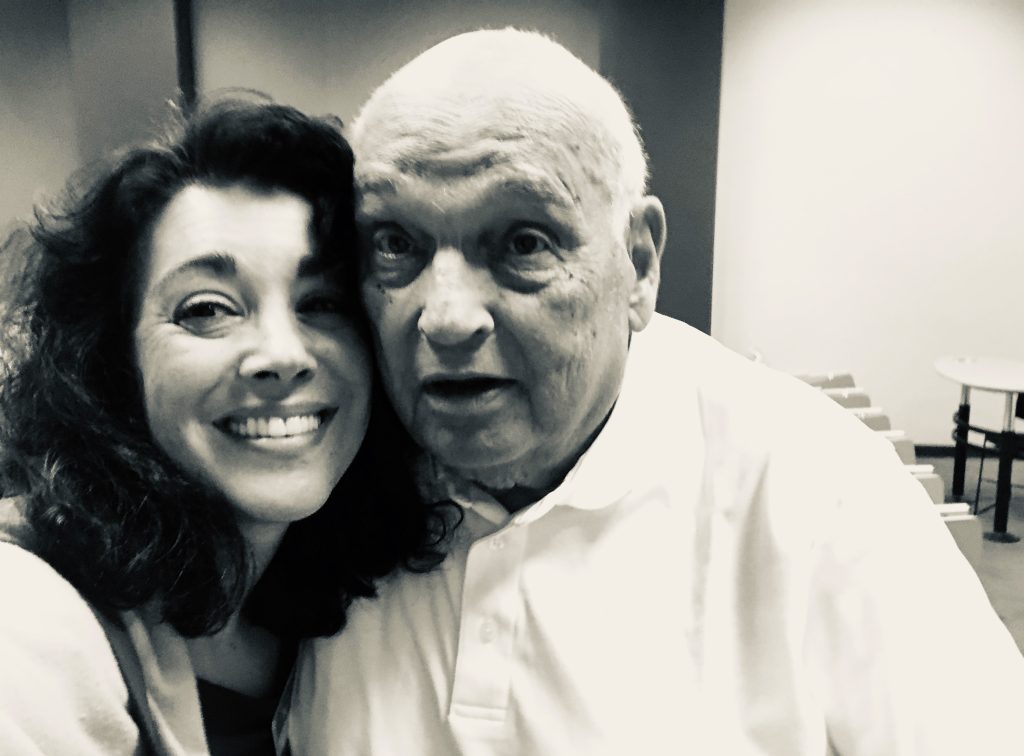
In fall 1998, my discussion section of General Honors 103GH: The Early Modern World, the third semester of the Honors Humanities Sequence, met in one of the two classrooms on the first floor of Hatch Hall. I was in one room, and Bill Bondeson was in the other. It was my first year teaching in the Sequence; it was Bill Bondeson’s 34th year. I was a graduate student; he was a tenured philosophy professor. Bill had given the introductory lecture to the entire course and followed it later with brilliant lectures on both David Hume and Immanuel Kant. I was reading and teaching most of the texts for the first time, just one step ahead of the band you could say. But Bill stopped by my classroom one day toward the end of the semester and asked me about teaching Emily Dickinson’s poem “I like to see it lap the Miles.” He was particularly interested in the biblical reference to Boanerges in the last stanza and thought that I, who was specializing in 19th century American literature, might have some thoughts.
When I heard that Bill passed away, this was one of the first moments (out of 28 years of friendship) that I thought of because it illustrated some of the things I loved most about Bill — how he welcomed me into Sequence by treating me like someone with something to say even when I’m not sure I had that much revelatory to share; how he took teaching seriously no matter how many times he’d taught a text or an author; how he was fundamentally curious about everything, from the nuances of Emily Dickinson’s poetry to modern art to documentary film and choral odes. He was good at the long conversation, and he was excellent at friendship and standing up for the value of the humanities in life, regardless of profession.

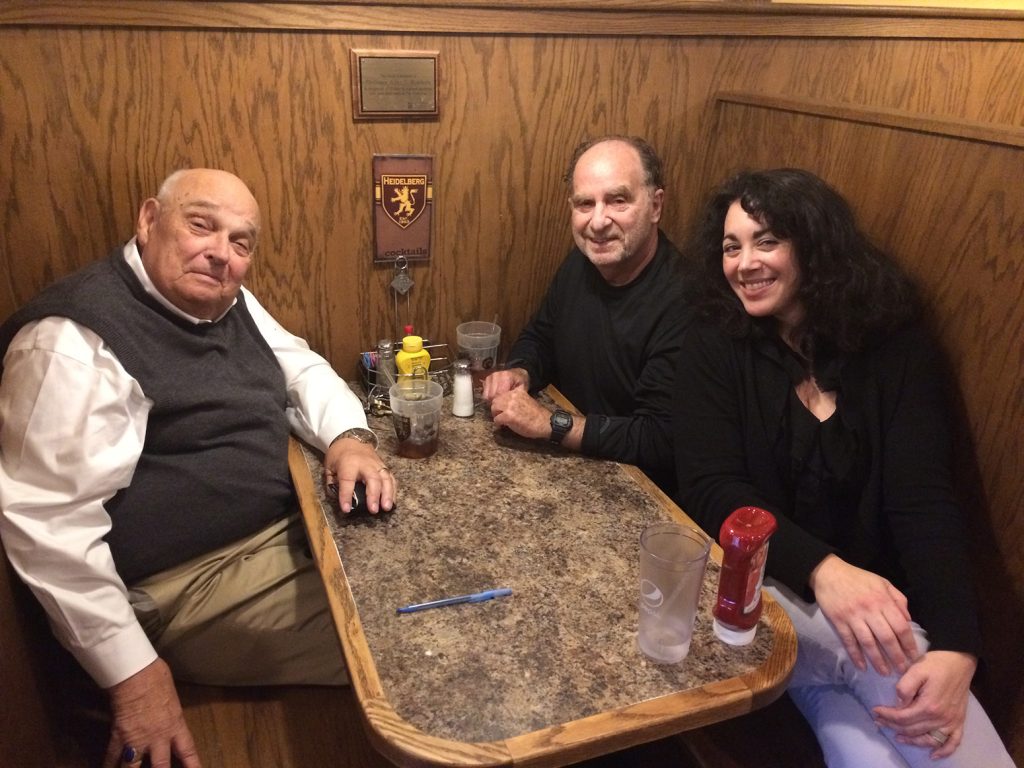
After Bill retired, we made a point to see each other — sometimes over a pork loin sandwich at the Berg, sometimes at a concert, sometimes with fellow humanities colleagues like Ted Tarkow, Stu Palonsky and Peter Markie. And somewhere along the way, the Humanities Lunch Crew was formed. No matter what else was going on, we five tried to get together regularly. In the early years, we did a tour of Columbia restaurants but more often of late, we’d just show up at Bill’s house with a Masterpiece pizza from Shakespeare’s, catch up and tell and re-tell stories for a couple of delightful hours. Some of the stories on repeat were humanities lore: 1) The time Stu Palonsky was welcoming students into the Humanities Sequence and was listing the authors we were going to be reading. “Cervantes,” he listed. And from the back of the lecture hall, we heard, “Here!” A student with the last name of Cervantes thought he was calling roll. The timing was perfect. 2) The four food groups that Bill would mention at least once a semester in a lecture: pasta, garlic, chocolate and scotch; 3) His firm belief that good parking spots were not found but created; 4) The times Peter would tease Bill about having known Aristotle personally; 5) Bill’s attempt during a lecture on Stoic philosophy to write that the world was one giant “organism” on the overhead projector but left out some letters.
One recent tale we’ve told multiple times over the last year goes like this. One spring day in 2024, Ted, Peter and I visited Bill when he was briefly in a long-term care facility. Ted brought a book of art memes to liven what we worried might be a sad visit, but Bill looked just the same — as cheerful and gracious as ever, and we fell into catching up, gossiping and laughing as usual. We needn’t have worried: Bill was having a grand time being well taken care of by, it turns out, a whole host of doctors and therapists he had taught medical ethics to. Dr. B was in good hands!
As we were chatting, one of his granddaughters stopped by and gave him a small bag of Oreos, another of Cheez Balls and a quart of half-n-half, which he placed on the windowsill next to his hospital recliner. “Uh…Bill,” we said, “what’s with the half-n-half?” “Oh, that’s my G&T.” “G&T,” we asked? “A little gin and tonic to get through the afternoon,” he said with a sly smile. And how we howled with laughter! I knew for sure they were going to kick us out. Who has this much fun in rehab?
Bill and I became friends through the Humanities Sequence; we taught every semester of the course together until his retirement in 2011. But even in that space, among brilliant colleagues from across A&S, Bill stood out. He had a capacious mind and is, I think, the only faculty to have lectured in all four courses in the Sequence, giving talks on everyone from the pre-Socratics, Plato, Aristotle, the Stoics and Epicureans, to Augustine and Aquinas; from Descartes, Hume and Kant, to Marx, Nietzsche, Freud, Sartre, Ayer and Beckett. So much of what I learned about philosophy, about teaching in the Humanities Sequence and about the fundamental question of how to lead not just a good life but a meaningful one, I learned by watching Bill. Like all of Bill’s friends I expect, we shared a fundamental belief in the power and significance of the humanities in our lives. It’s no surprise to me now that the two quotes I remember most from Nietzsche come from Bill’s lectures: “Free from what? What does that matter to Zarathustra! Clearly, however, shall your eye show to me: free for what?” and “Without music, life would be a mistake.” And I can see him now: blue sweater vest, leaning against a table at the front of Allen Auditorium, overhead projector and markers at the ready, Diet Coke in hand. His lectures were always a careful balance between information the students needed to contextualize their reading (e.g. What is existentialism? What are Aristotle’s four causes and why should we care? What is scholasticism and why is Aquinas important to understanding the Middle Ages?) and the big questions (e.g. How do we know what we know? What is the good life? What is the role of the imagination in who and what we are? Why is there suffering?). Casually brilliant, you could say, but most importantly, you knew — whether you were a student or a colleague — that the conversation was never one-sided. Meaning was what we made together. And make it we did.
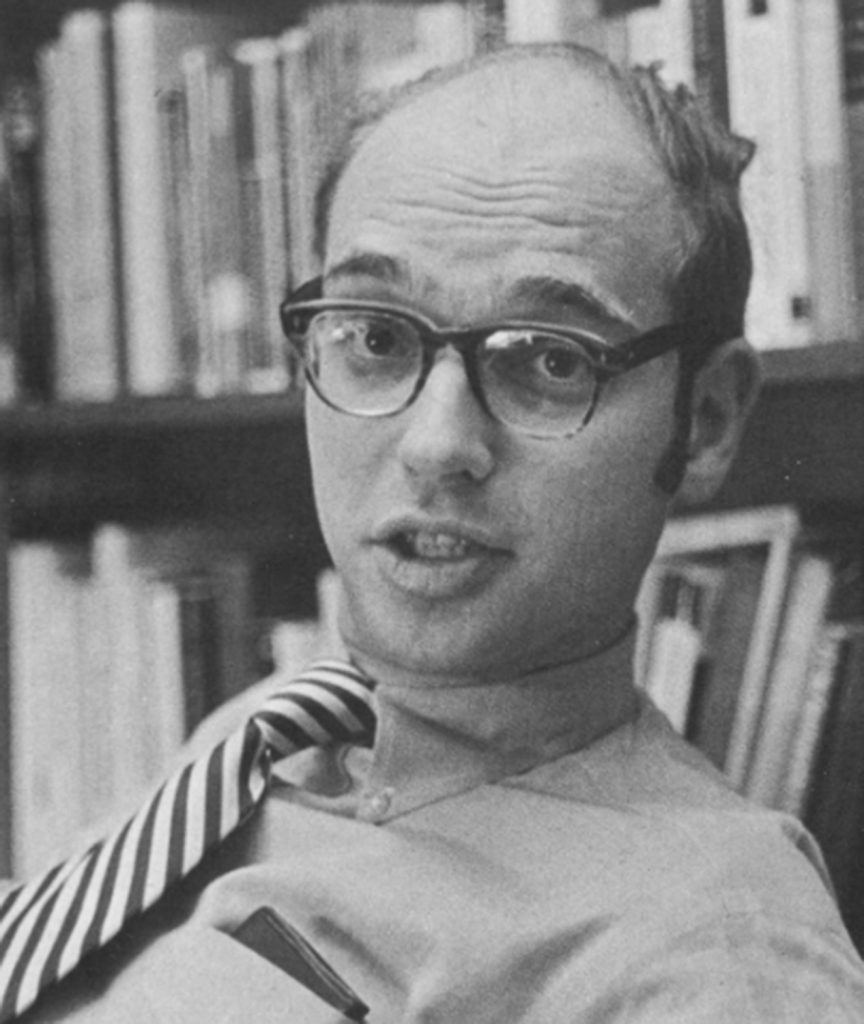
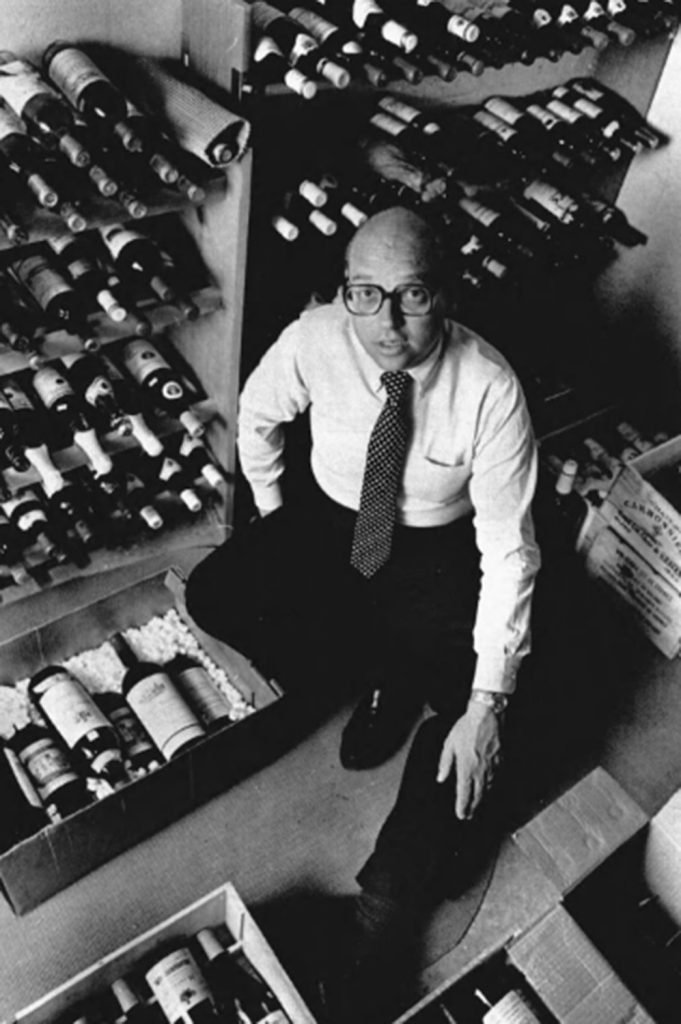
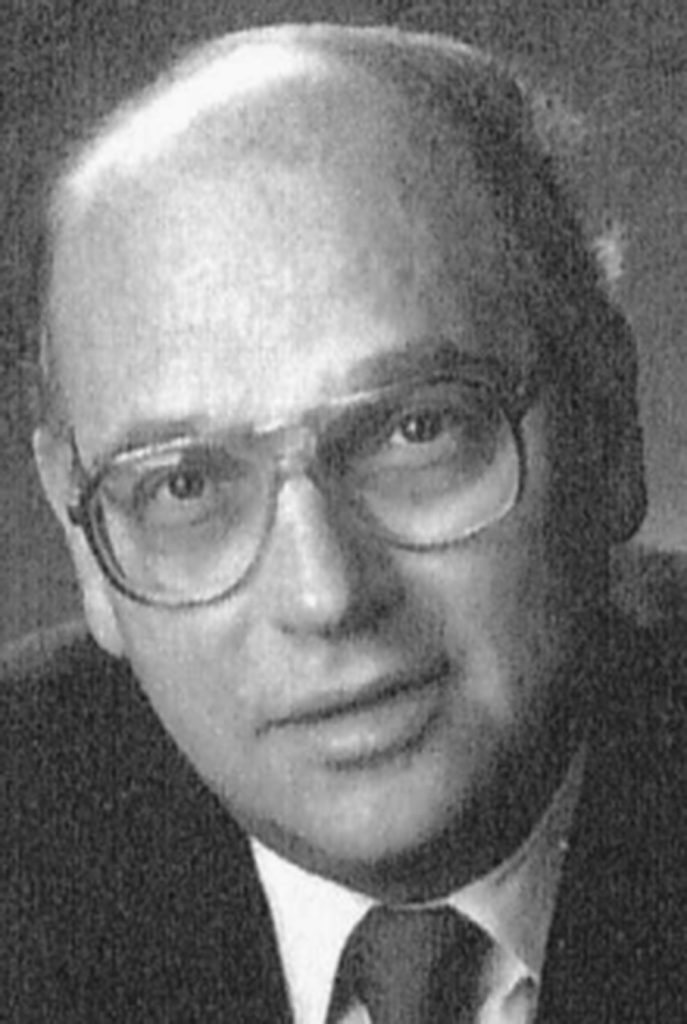
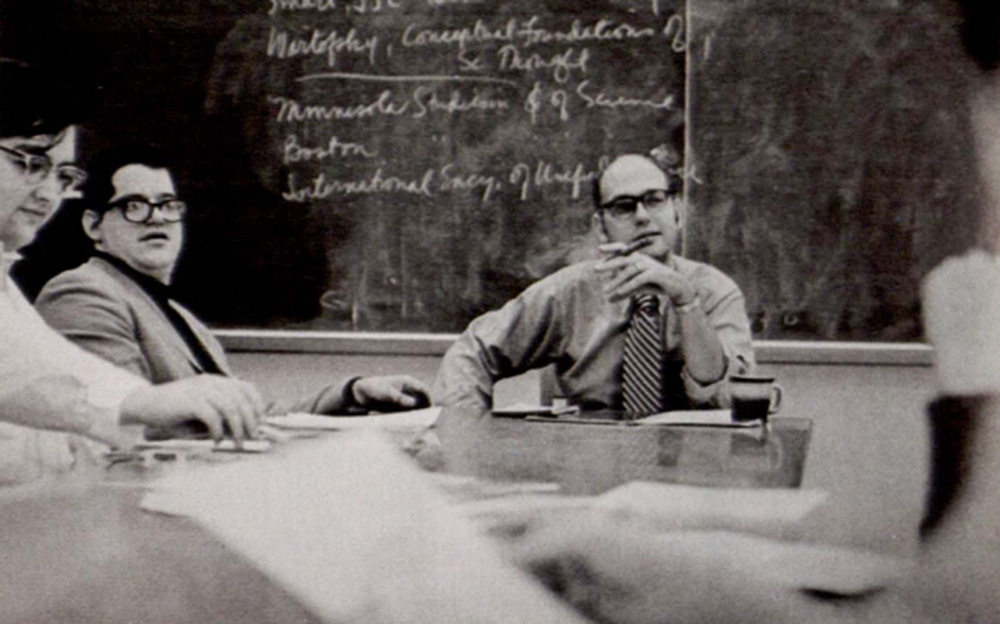
The Switzler Hall bells will ring at 1:30 p.m. on Friday, April 10, in honor of Bondeson. The ringing of the bells is a Mizzou tradition that recognizes the death of a beloved member of the Mizzou community. In lieu of flowers, the Bondeson family is asking individuals to please consider donations to a handful of local groups, including the William B. Bondeson Honors College Opportunities for Excellence Endowment Fund.