Story by Logan Jackson
Photos courtesy of Brian Conforti
Brian Conforti had just earned a psychological sciences degree from the University of Missouri and finished training for an account manager job with Xerox when the world changed. The Sept. 11 attacks created uncertainty across the globe. While the attacks were devastating, the events sparked a sense of patriotism across the United States.
For Conforti, the situation led him in an unexpected direction. He soon enlisted and began what would become a 20-year career in the U.S. Air Force.
“I was a Boy Scout, and service was a big part of who I was growing up,” Conforti said. “It was truly ingrained in me. When everything happened, it just felt like it was time to serve in that capacity.”
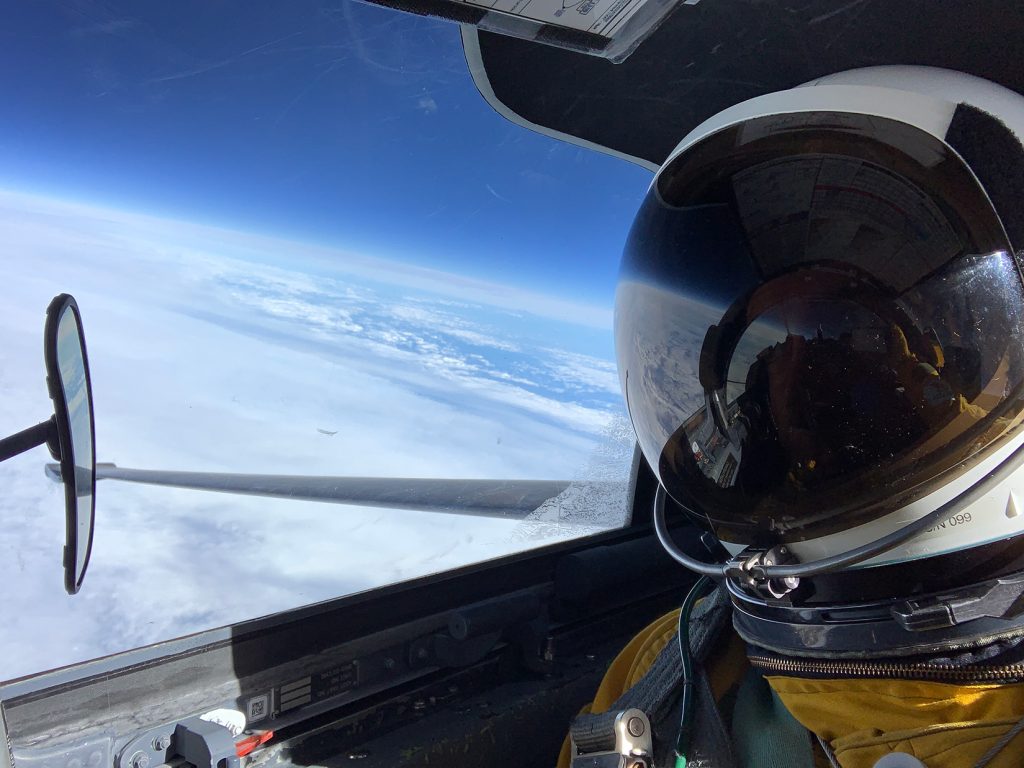
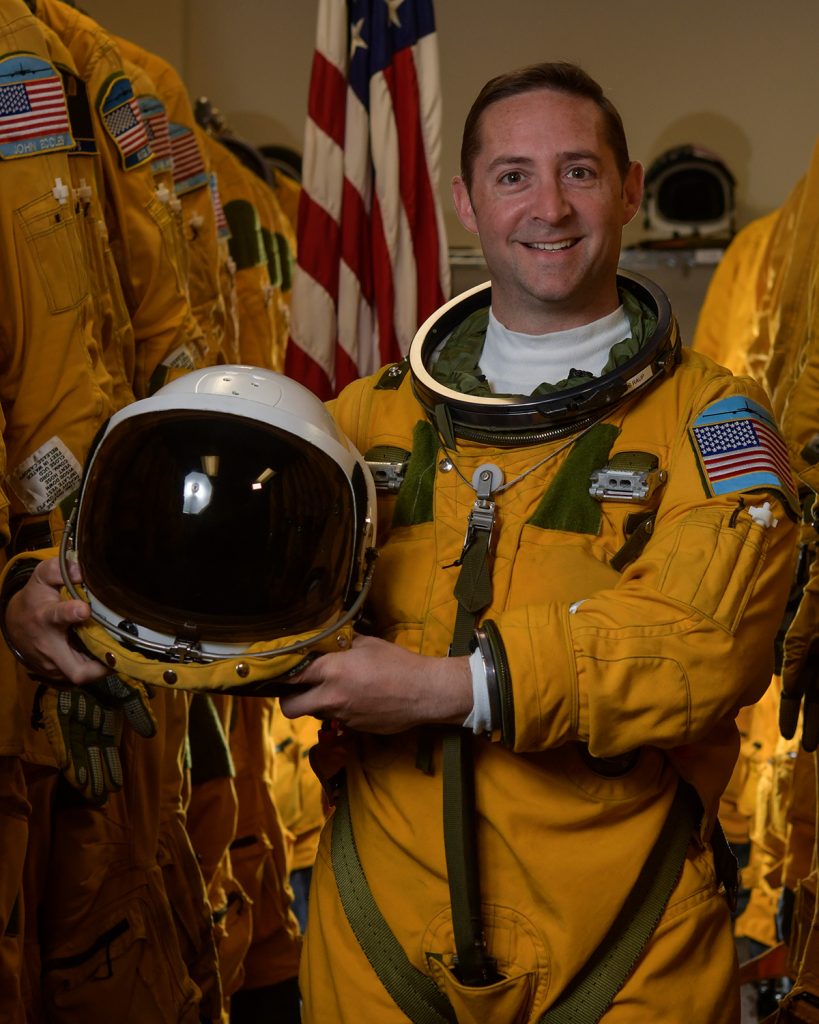
During his 20 years in the Air Force, Conforti held several roles. Most notably, he served as a pilot of the Lockheed U-2, a single-engine, high-altitude reconnaissance aircraft that flies at the edge of space. Only 1,123 individuals have completed a solo flight in the spy plane since its creation in 1955.
He didn’t envision spending so much time in the sky when he originally walked onto the Mizzou campus as a freshman. A Kansas City, Missouri, native, he had his sights set on attending medical school. He entered college as a chemistry major, but he only spent a single semester in that degree program.
“I took a calculus class that was required for anyone on the pre-medicine path, and it kicked my butt,” Conforti said. “My roommate told me that he had never seen someone study so hard just for a C. For me, that was my first big failure. I had never come up against something that I couldn’t study my way out of. At the end of the day, instead of realizing that I could just fight through, I decided to change my major.”
Conforti did continue to take chemistry courses throughout his time at Mizzou but settled on psychological sciences as his new degree. Throughout those changes, the Mizzou Honors College provided consistent support. Advisors within the college helped Conforti navigate his academic decisions and helped prepare him for the future.
“The Honors College really kept me on track and made sure I graduated on time,” Conforti said. “I really liked that small group dynamic that the college offered. It was a huge benefit to have the one-on-one advising, too. My path through college took some twists and turns, and the Honors College was there to help guide me through each one.”
Conforti’s time at Mizzou taught him how to navigate unexpected changes, a lesson that would prove valuable as he began pursuing a career in the Air Force. His first attempt to join the military didn’t go as planned.
“I originally applied as an officer but was denied, as they were looking for someone with a degree in a STEM field,” Conforti said. “That was a tough denial, but I knew I wanted to enlist.”
Although his application to become an officer was denied, Conforti remained determined to serve and, ideally, to fly. However, his eyesight wasn’t quite good enough for that career. A friend who was serving in the Navy as a pilot told him about a military program that would correct his eye issues. Conforti went to a recruiter’s office soon thereafter.
“I told the recruiter I wanted to fly and nothing else,” Conforti said. “I don’t think he believed I was going to follow through with it. He told me if I was serious, I was going to have to wait a bit. A flying position finally came around, and he gave me a call. I ran back to the office and signed on the dotted line.”
Conforti’s interest in flying wasn’t a surprise to those who knew him best. He had an uncle who built and flew model airplanes. Conforti’s grandfather was a pilot in World War II.
“I’d always been around flying and thought it was really cool,” he said. “But I’d always been told that my eyes weren’t good enough and I would never be able to be a pilot. When my buddy told me that it was actually something that I could do, I knew I was going to have to work extremely hard to make it happen. So that’s what I did.”
His first role was as a KC-135 boom operator. The KC-135 is an aerial refueling tanker. As a boom operator, Conforti guided an extendable metal boom into another aircraft’s fuel receptacle to transfer fuel in flight.
Throughout that time, Conforti was still focused on becoming a pilot.
“I told the commander on my first day that I wanted pilot training,” Conforti said. “He saw my maturity and promised that if I worked hard for him and deployed for him, he would be in my corner to get the eye surgery and help me apply for pilot training.”
Conforti followed through on that commitment, continuing to deploy as a boom operator. His commander supported his efforts to correct his vision and Conforti was able to apply for pilot training. He eventually moved into an EC-130H aircraft commander role. The commander is a rated pilot responsible for the safety, navigation and tactical execution of the EC-130H Compass Call aircraft. Conforti was finally in the air.
“I was fortunate enough that my hard work, along with some luck and a little bit of skill, all came together at the right time,” said Conforti, who earned a master’s degree in business administration from Trident University International while he was deployed. “I had a couple of different paths that I could have taken. Ultimately, I’m really glad this is the path I wound up on.”
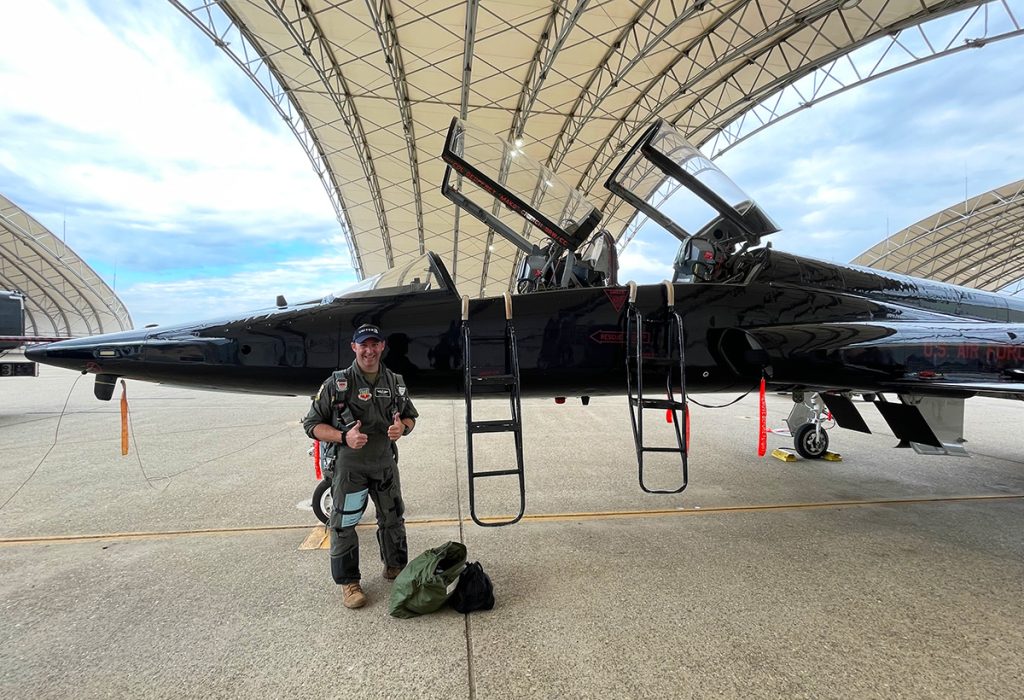
After four years as an aircraft commander, Conforti moved into a teaching role. He served as a T-6 instructor, evaluator and functional check flight (FCF) pilot. Those experiences were leading to a larger opportunity that Conforti had wanted to pursue since his second year as a boom operator.
“During a trip as a boom operator to the Al Dhafra Air Base in the United Arab Emirates, my co-pilot and I toured their facilities because he wanted to check out the U-2,” Conforti said. “I remembered seeing it take off and thought if I ever had the opportunity, I wanted to fly one. It’s a very long process, though.”
His experiences as a pilot and instructor helped prepare him to apply to become a U-2 pilot. That selection process includes a rigorous interview and physical screenings. Pilots fly at altitudes exceeding 70,000 feet and must wear astronaut-style full-pressure suits due to the elevation.
“Along with the interviews, we had multiple briefings,” Conforti said. “You receive the procedures that you have to know in the aircraft, and you have to memorize them all. That first flight is all about learning the pattern and basic handling characteristics. I spent a full weekend walking around in circles in my hotel room going through the pattern. I was like an actor rehearsing for a role. There are all these crazy feelings and sensations that are happening when you get into the jet that throw you off. It was vital to keep calm and fall back on what I had been rehearsing.”
Conforti’s first flight was with an instructor who demonstrated the correct way to handle the aircraft.
“There was a massive, massive roar as the engine revved up and that thing just leapt from the ground,” Conforti said. “You’re basically pointing straight up into the air. I was amazed at it all, but I knew I also had to pay attention and perform. I didn’t get to just be a passenger. If I wanted to come back tomorrow, I had to do all the things I had been practicing. It was a very humbling experience.”
After five years of flying and training future pilots, Conforti retired from the Air Force in 2023. He has continued flying since then, serving as a first officer for United Airlines and making international flights around the world.
Conforti has faced plenty of challenges throughout his career, from changing majors at Mizzou to finding a route to pilot training. Those experiences reinforced the importance of stepping outside his comfort zone.
“I think it’s vital to get out of your comfort zone,” Conforti said. “That’s the only way you can challenge yourself. It doesn’t have to be anything dangerous. But you have to move past that fear of failure. You don’t want to expect failure, but you do want to prepare yourself for it. And sometimes those challenges are going to come when you least expect it. That’s why it’s important to also have a good support system in place.”