Story by Logan Jackson
Javier Kelly Cuenca spent his late teens cleaning apartments and washing dishes at restaurants, saving every dollar he could for college. As the first person in his family to navigate higher education, Kelly Cuenca arrived at Mizzou with around $6,000 and a plan. He gave himself a year to secure financial aid that would allow him to stay at Mizzou. If he couldn’t find a scholarship, he would drop out.
“One of the things about being a first-generation college student is that you don’t want to go into debt,” said Kelly Cuenca, a Columbia native who attended Hickman High School. “It was all very intimidating, but I knew that I had to make the most out of my first semester on campus.”
Kelly Cuenca did just that. He found unique undergraduate research opportunities, connected with faculty mentors and discovered the Honors College through the Missouri Land Grant Honors scholarship. The award provided the financial support he needed to stay at Mizzou and earn a biochemistry degree in 2023.
Kelly Cuenca is currently a graduate student at Washington University in St. Louis, where he is studying neuroscience. He mentors students at various stages of their education, advocating for them as they navigate their own academic journeys.
“I work with extraordinary students every day,” Kelly Cuenca said. “But many of them wrestle with the same doubts I had early on in my college career. I remember keeping to myself a lot. It wasn’t until someone took the time to show me that I belonged at Mizzou that things changed. That was a powerful experience, and I strive to be that type of mentor to my students.”
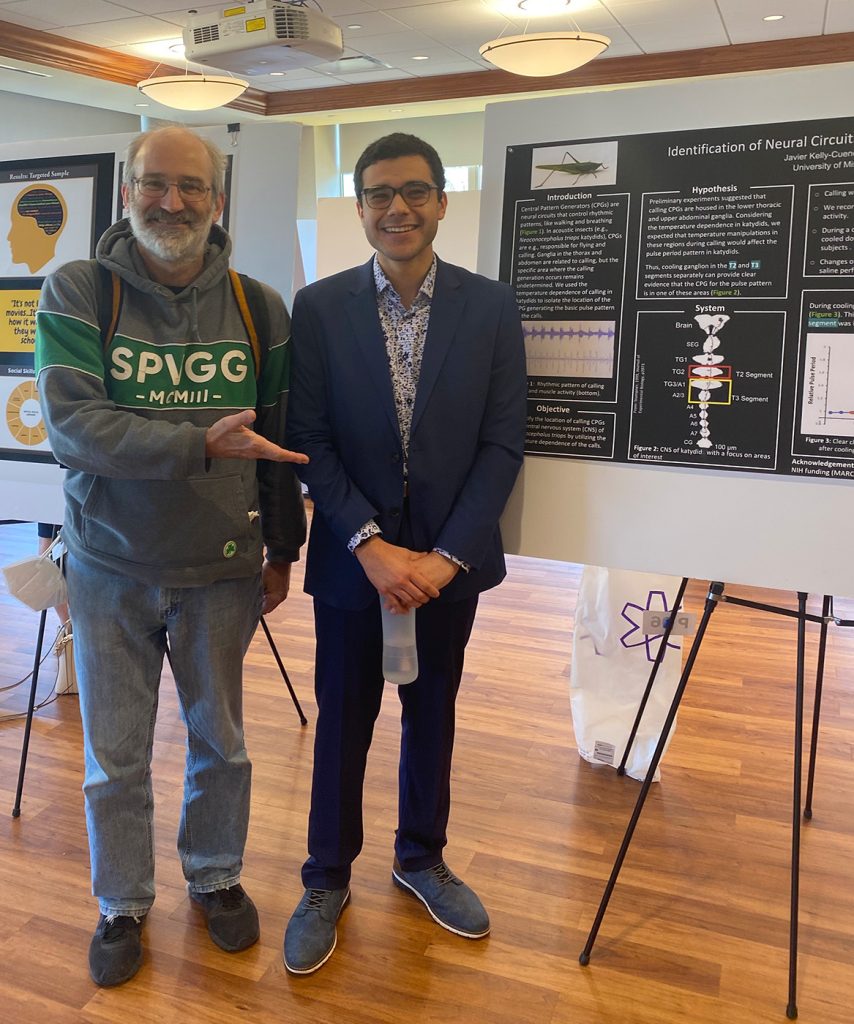
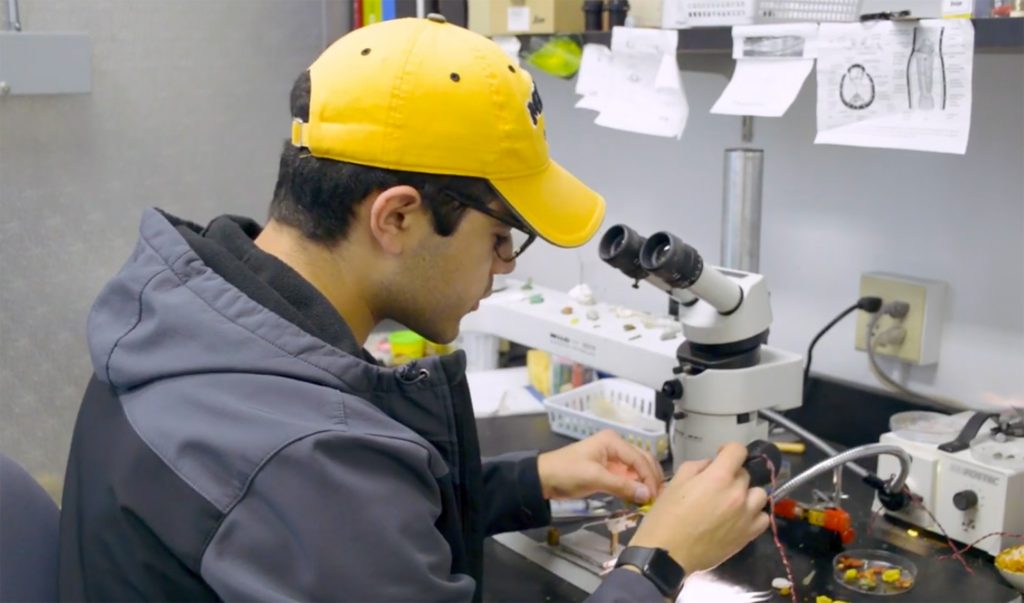
One of the first individuals to provide that encouragement for Kelly Cuenca was Johannes Schul, a professor of biological sciences. Kelly Cuenca worked in Schul’s research laboratory throughout his undergraduate career. Schul’s research focuses on the neuronal basis of pattern-recognition processes and the evolution of novel traits in both katydids and treefrogs.
“Dr. Schul is a very passionate individual and really advocates for his students,” Kelly Cuenca said. “When I was describing what I was experiencing as a first-generation student, he helped me separate a difficult position from a losing one. He assured me that we would find a path forward together. That was so meaningful at the time because I didn’t have that confidence. He saw my potential and kept pushing me.”
Finding a sense of belonging through research came naturally for Kelly Cuenca, as it was how he originally connected to Mizzou. As a Columbia native, he frequently visited campus for events and activities. But he gained a deeper understanding of the university’s offerings through the Elementary and Extended Education program at Hickman. That program allowed him to join a research laboratory as a high school student. He was paired with Bret Ulery, an associate professor in the Department of Chemical and Biomedical Engineering.
“I was a curious student, so that early research experience meant a lot to me,” Kelly Cuenca said. “Since I didn’t have those ties to college, I took every opportunity I could to be on campus and learn how that world worked. Working in that lab gave me a really good perspective about the importance of research and how vital it is to be collaborative.”
Kelly Cuenca’s research experiences at Mizzou spanned a variety of academic disciplines. During his four years at Mizzou, Kelly Cuenca went from an IMSD Scholar to a MARC Fellow, under the mentorship of program director Brian Booton. Through the Honors College’s ASH Scholars program, he joined an interdisciplinary community of undergraduate researchers exploring topics in the arts, social sciences and humanities. He was part of the Art of Death team, which examined the concept of death through artistic expression.
“That project changed how I thought about research,” Kelly Cuenca said. “You can approach the same problem from completely different angles, and each perspective can add something valuable. The exciting part is seeing what happens when those ideas come together.”
The Honors College allowed Kelly Cuenca to pursue interdisciplinary research and provided him with the opportunity to become a well-rounded student. He was part of the Humanities Sequence, one of the longest-running courses at Mizzou, which introduces students to the big ideas, questions and debates of the Western tradition while exploring literature, philosophy, art, history, religion and music.
“Everyone in the Honors College was just so passionate about their work,” Kelly Cuenca said. “The professors who I interacted with were inspiring and had a way of drawing you in on whatever subject they were teaching. I definitely became a more well-rounded individual through my time in Honors.”
Kelly Cuenca’s research efforts extended beyond Mizzou as well. For two years, he participated in the WashU ENDURE Program, which prepares students for graduate study in neuroscience. The program gave him opportunities to attend conferences and network with other professionals.
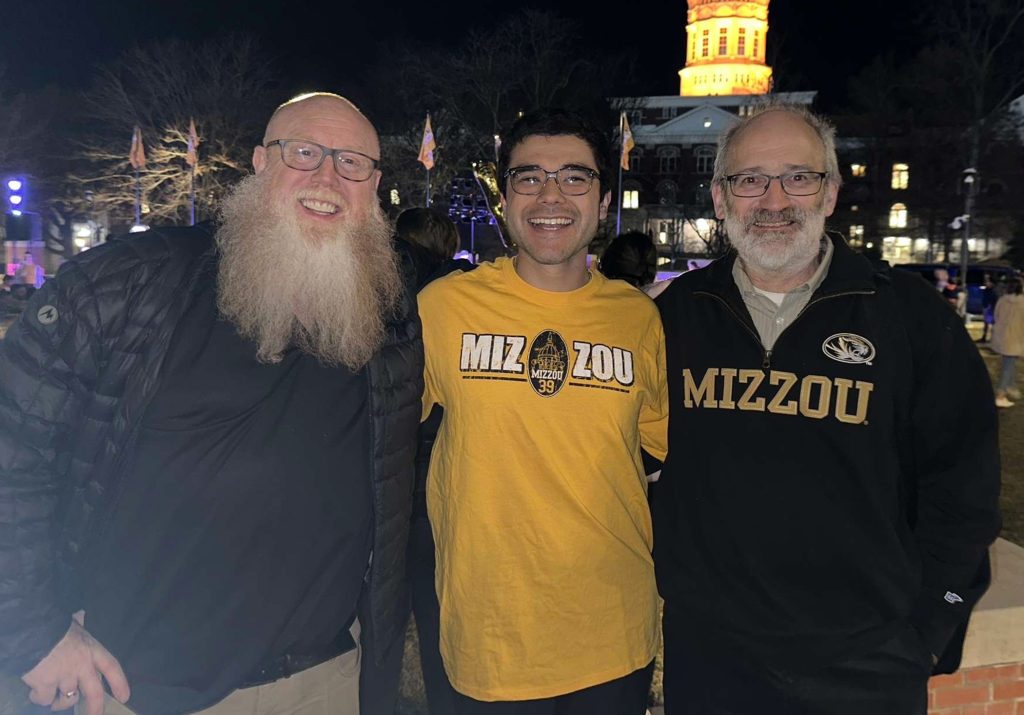
His accomplishments also earned recognition during his senior year at Mizzou. He was one of 39 seniors to earn the Mizzou ’39 Award, which recognizes academic achievements, leadership and service to Mizzou and the local community.
“I honestly cried when I received the Mizzou ’39 Award because it just felt unreal to me,” Kelly Cuenca said. “It was especially meaningful because it allowed me to reflect on the hard work that brought me there, as well as the important mentors in my life who helped along the way.”
Today, Kelly Cuenca is paying forward the encouragement he received at Mizzou. As a graduate student at Washington University in St. Louis, he works to create the same sense of belonging for younger students that his mentors helped him discover. He is part of the Castro Lab, led by Daniel Castro, an assistant professor of radiology. Kelly Cuenca investigates the biological mechanisms that shape motivation, learning and decision-making, building on research experiences with Schul and through the ASH Scholars program.
“I think that mentors should do more than just shape the kind of research that a student does,” Kelly Cuenca said. “I think they should shape the conditions under which one learns to think or be authentic. In high school, I got my sense of identity and learned what mattered to me. Through the help of my mentors in college, I became a more authentic version of myself.”
Kelly Cuenca’s work has earned national recognition. He was awarded the Ruth L. Kirschstein National Research Service Award for Individual Predoctoral Fellows from the National Institutes of Health. The award recognizes graduate students with the potential to become independent research scientists. In the Castro Lab, he continues to investigate the brain mechanisms that influence reward and motivation while mentoring the next generation of students.
“The investment that my mentors have made has taken root in me and is being passed on,” Kelly Cuenca said. “I wouldn’t be the person I am today without their guidance and encouragement. I have an optimism now that I share with each student I work with. No matter how bleak a situation may look, I am able to have a positive attitude and mindset to share with them. I will always be a Tiger and am so grateful for my Mizzou experience.”