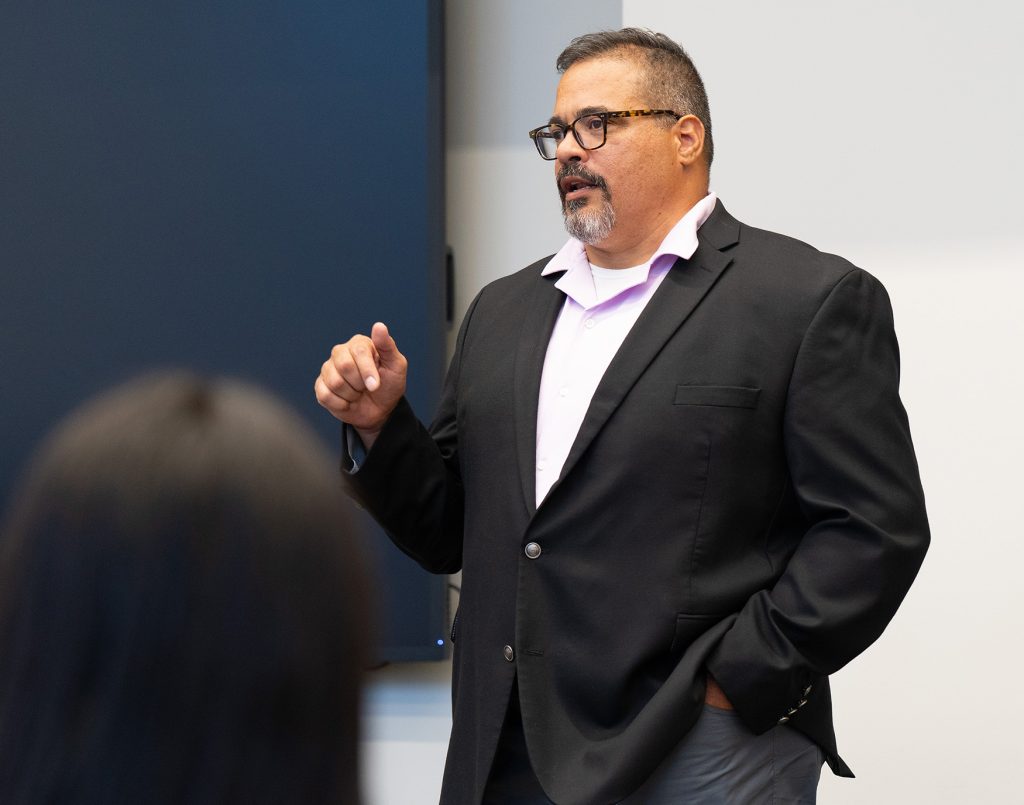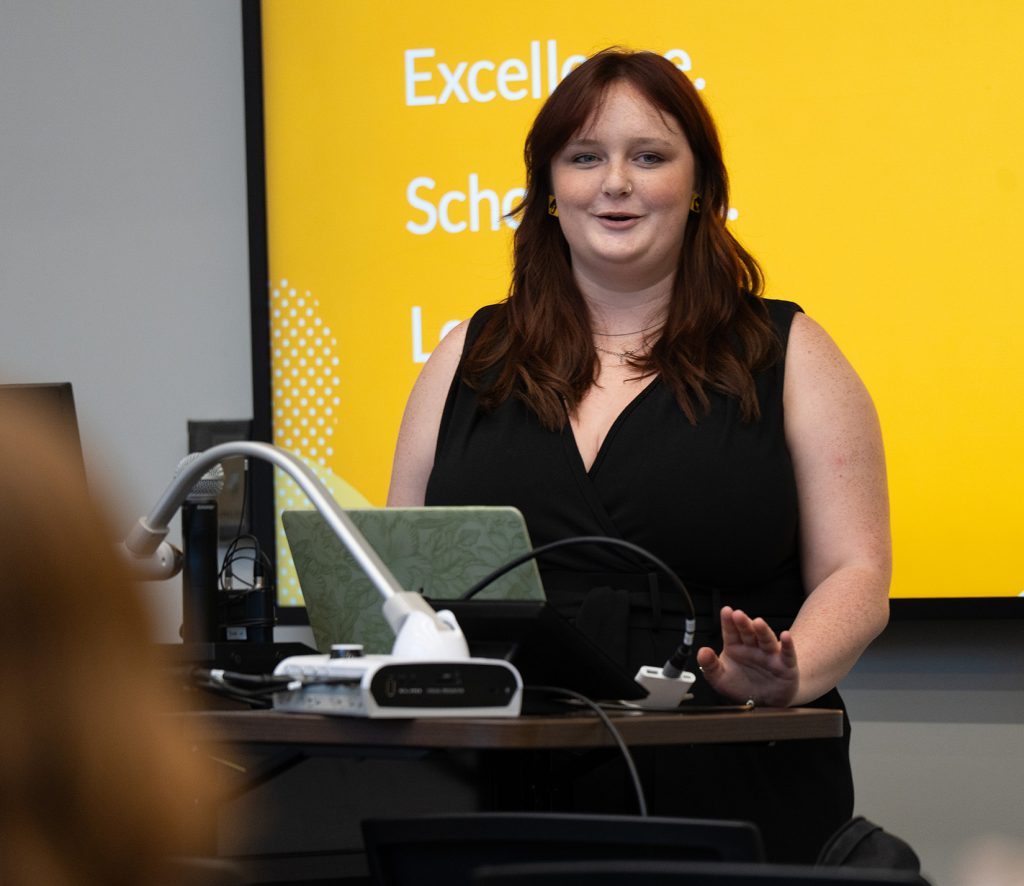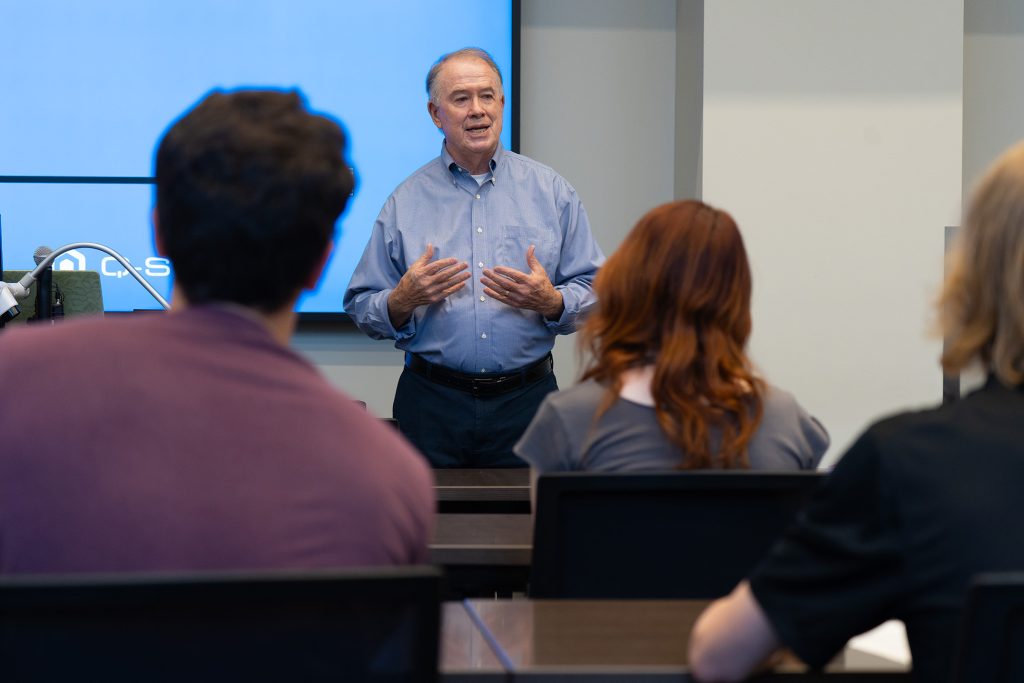
Want to make a real impact on issues you care about? The Deaton Scholars Program (DSP) brings together motivated students to collaborate on solutions to pressing local and global challenges rooted in poverty — such as homelessness, food insecurity, climate change, healthcare access and health promotion.
The mission of the Deaton Scholars Program is to provide a platform for students to:
- Explore the value of interdisciplinary teamwork
- Understand their individual role in collaborative problem solving
- Empower local action to address global poverty
We believe every student can contribute to creative solutions for the world’s most urgent and pressing issues. The Deaton Scholars Program offers students a chance to learn about and engage with local and global issues stemming from poverty and hunger. As a participant, students join diverse teams and delve head-first into creative problem solving. With the help of program leaders, students gain hands-on experience proposing, funding and implementing their own solutions.
DSP takes place during each spring semester and features six engaging biweekly sessions where scholars exchange ideas, build leadership and problem-solving skills, and connect with campus and community partners. Sessions are interdisciplinary, community-centered, and guided by both peers and faculty, creating a supportive space to turn ideas into action.
To be eligible for DSP, students must enroll in Wicked Problems in Public Health (General Honors 2310H) in fall 2026. This dynamic service-learning course fulfills the behavioral science general education requirement and equips students with the tools and frameworks needed to tackle complex social problems. Students selected for DSP will participate in the program in the spring 2027 and receive a $2,000 scholarship.
DSP and the course are open to all Mizzou students, Honors and non-Honors, from any major and at any class level. Enroll when you register for classes. Non-Honors students can email mizzouhonors@missouri.edu to request a permission number.
Brady and Anne Deaton founded the Deaton Institute in 2013 with the aim of eliminating extreme poverty and food insecurity globally.
Brady Deaton served as Chancellor of the University of Missouri from 2004-13, after coming to Missouri in 1989 as Department Chair of agricultural economics. He also served as Deputy Chancellor and Provost at Mizzou. As an agricultural economist, he engaged in research in Asia, several African countries, and in Haiti and other Caribbean countries. He received five honorary degrees from universities in Thailand, Korea and India, as well as the University of Kentucky. Deaton was appointed by President Barack Obama to Chair of the Board for International Food and Agricultural Development (BIFAD), from 2011-16, and continues to serve as a member. His undergraduate degree is from the University of Kentucky and he has a Ph.D. from Wisconsin.
Anne Deaton has focused her career on special needs populations including the elderly and persons who are cognitively and physically challenged. She worked in higher education as an assistant professor in the Department of Human Development and Family Science, and in state government, serving as deputy director of the Missouri Division of Aging, and then director of the Missouri Division of Developmental Disabilities. She is a founder and an ongoing leader for Children’s Grove, a Columbia non-profit that promotes kindness in youth and the community. Her work in community development, with a focus on poverty and hunger, began during her college years when she engaged in volunteer service in the U.S. and abroad. She has had extensive experience in mentoring and in founding and supporting a wide variety of volunteer programs that raise the quality of community life, serve people in need and promote international friendships.